
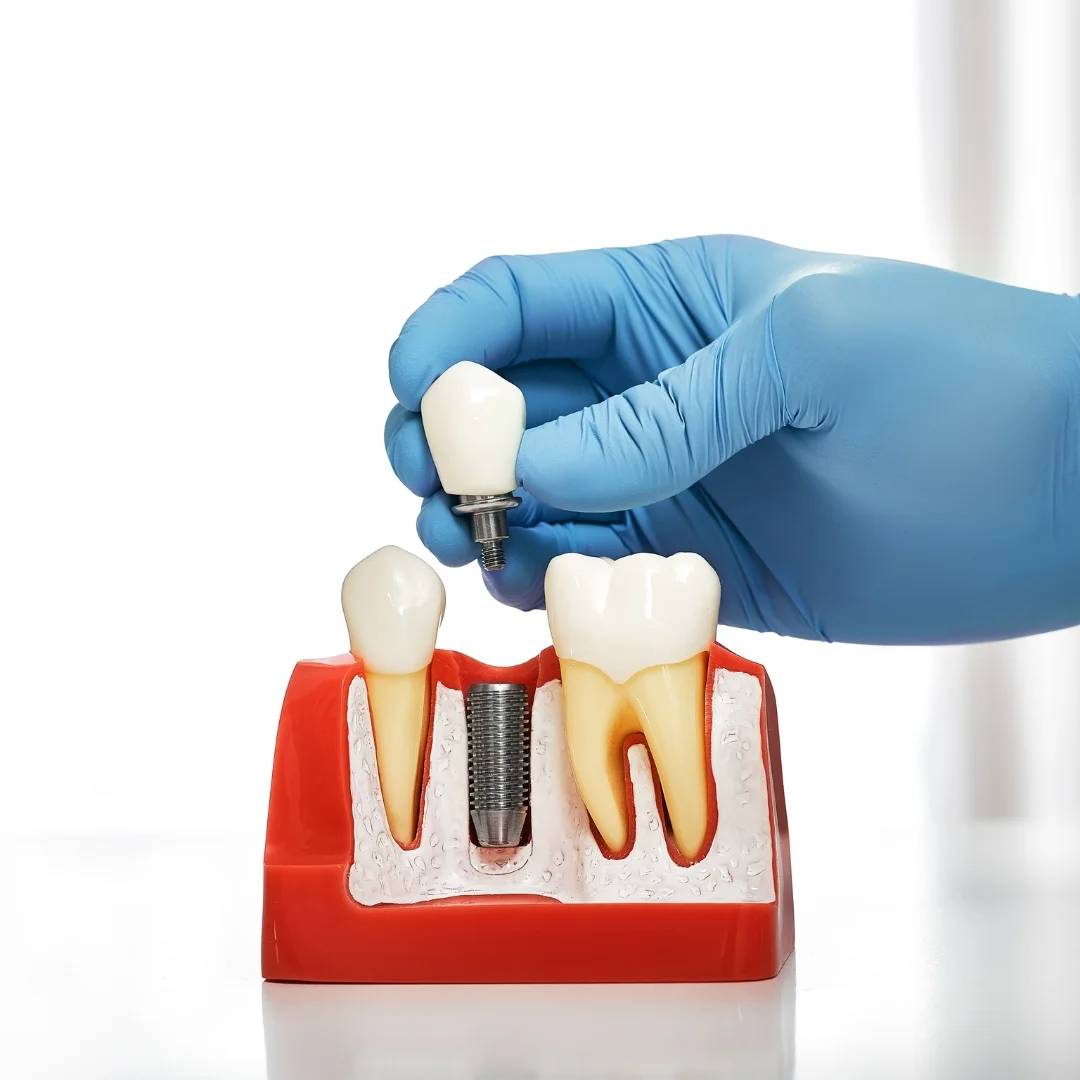
Deciding between a crown and a bridge feels confusing when you are already dealing with a sore or missing tooth. The good news is that the distinction is more straightforward than most patients expect. Understanding dental bridges vs crowns in Kitchener, ON starts with one question about what is physically there, and then the clinical path becomes clear. Below, we walk through each procedure step by step, so you know exactly what recovery looks like before you sit in the chair.
Dental Bridges vs Crowns: What Is the Real Difference?
A crown restores a single tooth that is cracked, heavily decayed, or weakened after a root canal. A bridge, by contrast, fills the space left by one or more missing teeth. Specifically, a crown is a custom cap that fits over your existing tooth. A bridge uses crowns on the neighbouring teeth to hold a false tooth in place.
According to the Canadian Dental Association, a crown covers and strengthens a tooth that cannot be restored with a filling alone. Furthermore, the Canadian Dental Association explains that a bridge literally bridges the gap where teeth are missing. Both treatments fall under restorative care, and both are offered through our crowns and bridges service in Kitchener.
When a Crown Is the Right Choice
Choose a crown when the tooth is still in your mouth but badly compromised. For example, a large fracture, extensive decay, or a recent root canal often calls for a crown. Additionally, crowns top off dental implants and cover teeth worn down by grinding. The tooth structure remains yours; the crown simply protects it.
When a Bridge Makes More Sense
A bridge is the answer when a tooth is already gone and healthy teeth sit on either side of the gap. Consequently, those neighbouring teeth become anchors that support a replacement tooth in the middle. However, if the surrounding teeth are weak or you prefer not to alter them, your dentist may discuss an implant instead.
Step by Step: What the Procedure Actually Involves
Both treatments usually take two visits, and neither should hurt. Specifically, we numb the area thoroughly before any work begins, so comfort is the baseline, not the goal.
For a crown, the first appointment involves gently reshaping the tooth and taking a digital scan. Then we place a temporary crown while the lab builds your permanent one. At the second visit, we remove the temporary and bond the final crown in place. A bridge follows the same rhythm, except the anchor teeth on both sides are prepared together.
Modern workflows make this smoother than ever. A systematic review in Cureus (2024) compared conventional and digital methods for fabricating fixed prostheses and found digital workflows increasingly deliver strong precision. We combine that technology with personalized care plans, which keeps your appointments efficient and predictable.
Recovery Expectations You Can Count On
Recovery from either procedure is typically mild and brief. In most cases, patients return to normal eating within a day or two. Nevertheless, a few sensible habits protect your new restoration.
Expect some gum tenderness or temperature sensitivity for a short while after each visit. Additionally, while wearing a temporary, avoid sticky or very hard foods that could loosen it. Once the permanent crown or bridge is bonded, you can eat normally again. Meanwhile, keep brushing gently and floss carefully around the edges to support your gum and periodontal health.
If you grind your teeth at night, a protective night guard can extend the life of your restoration considerably. Our team will flag that during your exam and recommend one if it suits you.
How These Compare With Other Options
Crowns and bridges are not your only choices, and that is worth understanding. For a single missing tooth, a dental implant topped with a crown avoids altering neighbouring teeth entirely. For several missing teeth, a dental implant or implant-supported option may offer a longer-lasting result.
That said, bridges remain a proven, less invasive solution when the anchor teeth are already strong or need crowns anyway. Research on fixed prostheses continues to show high survival rates over many years. Consequently, the best path depends on your specific bite, budget, and goals, which is exactly what we map out together during a consultation.
Frequently Asked Questions
Is a crown or a bridge more painful?
Neither should cause pain during treatment, because the area is fully numbed. Afterward, mild tenderness is normal and usually fades within a few days.
How long do dental bridges and crowns last?
With good oral hygiene and regular checkups, both commonly last ten to fifteen years or longer. Specifically, avoiding hard foods and treating nighttime grinding helps them last even longer.
Can I eat normally after getting a bridge or crown?
Yes, once the permanent restoration is bonded, you can eat as usual. However, during the temporary phase, favour softer foods and chew on the opposite side.
Does the Canadian Dental Care Plan help cover these treatments?
Williamsburg Dental Center accepts the Canadian Dental Care Plan, so we can review your coverage during your visit and explain your options clearly.
Book Your Consultation in Kitchener
Choosing between a bridge and a crown becomes easy once a dentist examines the tooth and the surrounding area. Our Kitchener team offers extended evening and Saturday hours to make that visit convenient. Contact Williamsburg Dental Center today to schedule your assessment and get a clear, personalized recommendation.
Sources & References
- Canadian Dental Association, “Crowns”
- Canadian Dental Association, “Bridges”
- Comparison of Conventional and Digital Workflows in the Fabrication of Fixed Prostheses: A Systematic Review (Cureus, 2024)